

AI system attacks are hitting companies every single day. Just last month, hackers used AI tools to break into major banks and steal millions. That’s scary, right? If you work in tech or cybersecurity, you need to know how to fight back. The best AI security books can teach you exactly what to do.
TL;DR
AI-powered cyber threats are growing fast, making security skills critical. Practical DevSecOps recommends 7 top AI Security books that help you secure large language models, defend against AI threats, and ensure data privacy and compliance. |
Titles like Large Language Models in Cybersecurity and Hands-On Large Language Models offer practical guidance for developers, analysts, and CISOs. Each book helps you strengthen both technical and strategic defenses.
Boost your AI security skills; enroll in the Certified AI Security Professional(CAISP) and gain hands-on experience with LLM attacks, OWASP Top 10, and key compliance frameworks.
Certified AI Security Professional
Secure AI systems: OWASP LLM Top 10, MITRE ATLAS & hands-on labs.

Why AI Security Books Matter in 2026?
AI attacks are everywhere now. 74% of IT security professionals say AI-powered threats are seriously hurting their companies. Even worse, 93% of businesses think they’ll face AI attacks every single day this year.
The numbers get scarier. Last year, 73% of organizations got hit by AI-related security breaches. These attacks cost companies an average of $4.8 million each time. Plus, it takes 290 days to even find these attacks.That’s almost a full year!
Why does this matter to you? Companies desperately need people who understand AI security. They’re hiring fast and paying well.
That’s where books come in. The best authors are security experts who’ve fought real security attacks. They shared tricks you can’t learn anywhere else. Books also let you learn at your own speed. You can read them whenever you have time.
Think of books as your secret weapon. While others guess about AI security, you’ll have proven strategies from the world’s best AI Security experts.
How did We select These Books?
Finding the best AI security books isn’t easy. There are numerous out there, but most aren’t worth your time. We spent 3 months reading, testing, and comparing to bring you only the winners.
How we picked:
- Author Background: We only chose books written by real security experts. These authors have fought actual AI attacks, not just talked about them. Many work for top tech companies or government agencies.
- Technical Accuracy: Every book got fact-checked. If the information was wrong or outdated, we tossed it out.
- Real-World Use: Can you actually use what you learn? We tested the methods in each book. Only books with practical, working solutions made our list.
- Reader Reviews: We read reviews from IT professionals, security analysts, and new learners. Books with consistent praise from real users ranked higher.
AI security changes fast. We focused on recent AI security books that cover 2024-2025 threats and solutions.
Whether you’re just starting or you’re already an expert, we found books that match your level.
The result? A solid list of books that will actually make you better at AI security.
Also read the AI Security Engineer Roadmap
Top AI Security Books to Read in 2026
1. Large Language Models in Cybersecurity: Threats, Exposure and Mitigation – Editors – Andrei Kucharavy and others
Learn how to protect against AI security threats with this practical guide to Large Language Models in cybersecurity. Discover real risks, prevention strategies, and safe AI implementation from top security experts.

What You’ll Learn:
- Understanding AI Language Models: Learn what large language models are, how they work, and where they’re commonly used in business and technology.
- Recognizing AI Security Threats: Identify how hackers can misuse AI tools for attacks and spot new vulnerabilities when adding AI to your systems.
- Predicting Future Risks: Stay ahead of emerging threats by understanding how AI technology is evolving and what new dangers might appear.
- Protecting Your Organization: Get practical steps and tools to safely develop, deploy, and use AI while keeping your systems secure.
- Building Secure AI Systems: Learn best practices for creating AI solutions that are safe from the ground up and understand both the benefits and risks of AI in security.
2. Hands-On Large Language Models: Language Understanding and Generation – Authored by Jay Alammar and Maarten Grootendorst
Learn practical large language model applications with hands-on tutorials and visual learning. Build semantic search engines, text classifiers, and AI-powered systems using pretrained models. Perfect for developers ready to implement cutting-edge language AI solutions.

What You’ll Learn:
- Using Pretrained Language Models: Learn to implement ready-to-use AI models for copywriting, text summarization, and content generation without building from scratch.
- Building Smart Search Systems: Create semantic search engines that understand meaning beyond keywords, using advanced techniques like dense retrieval and reranking.
- Text Analysis and Classification: Develop systems to automatically categorize, cluster, and analyze large amounts of text data for business insights.
- Advanced AI Pipelines: Build complete workflows that combine multiple AI techniques, from prompt engineering to retrieval-augmented generation, for better results.
- Model Customization and Training: Understand how to fine-tune existing models for your specific needs and optimize performance for real-world applications.
3. Build a Large Language Model – Authored by Sebastian Raschka
Build your own Large Language Model from scratch with this step-by-step guide. Learn to code, train, and fine-tune GPT-style models without existing libraries. Create personalized AI assistants that run on your laptop.

What You’ll Learn:
- Code Complete LLM Architecture: Build every component of a large language model from the ground up, including attention mechanisms and GPT-style architecture comparable to GPT-2.
- Train Models from Raw Data: Learn to prepare datasets, implement pretraining pipelines, and train your LLM on unlabeled text data using your hardware.
- Fine-tune for Specific Tasks: Customize your model for text classification, instruction following, and conversational AI using advanced fine-tuning techniques like LoRA.
- Understand LLM Internals: Gain profound knowledge of how language models actually work by building each component yourself, from tokenization to text generation.
- Deploy Personal AI Assistant: Create a fully functional chatbot that follows instructions and runs efficiently on ordinary laptops, with optional GPU acceleration.
4. The Developer’s Playbook for Large Language Model Security: Building Secure AI Applications – Steve Wilson
Secure your AI applications with this practical guide to Large Language Model security threats and defenses. Learn proven strategies from OWASP Top 10 experts to protect LLM applications from emerging vulnerabilities and attacks.

What You’ll Learn:
- Understanding LLM Security Risks: Discover why large language models create unique security challenges different from traditional AI systems and learn to identify critical vulnerabilities specific to LLM applications.
- Threat Landscape Navigation: Explore the complete risk landscape surrounding LLM technology, including attack vectors, trust boundaries, and security conditions that developers must address.
- Top Vulnerability Identification: Learn to recognize and assess the most critical risks and vulnerabilities associated with LLMs using insights from the OWASP Top 10 for LLMs framework.
- Defensive Strategy Implementation: Deploy practical security measures and defensive techniques to protect your applications against the most common and dangerous LLM-specific attacks.
- Trust Boundary Management: Establish and maintain secure execution environments by actively managing critical trust boundaries within your LLM-powered systems to minimize risk exposure.
5. Adversarial AI Attacks, Mitigations, and Defense strategies – Authored by John Sotiropoulous
Protect AI systems from adversarial attacks with this comprehensive cybersecurity guide. Learn hands-on attack techniques, defense strategies, and MLSecOps practices. Covers emerging threats like prompt injection, model poisoning, and secure-by-design AI development frameworks.

What You’ll Learn:
- Adversarial Attack Techniques: Understand how attackers exploit AI systems through poisoning, Trojan horses, model extraction, and supply chain attacks by building your own testing playground.
- Hands-On Attack and Defense: Practice staging real adversarial attacks to see how they work, then learn proven countermeasures and mitigation strategies to protect your AI systems.
- Secure AI Development Practices: Implement MLSecOps, threat modeling, and secure-by-design methodologies using industry frameworks from OWASP and NIST for enterprise-grade security.
- Emerging AI Security Threats: Explore cutting-edge attacks specific to large language models, including prompt injection, deepfake creation with GANs, and privacy-based model theft techniques.
- Enterprise Security Framework: Develop comprehensive AI security strategies aligned with Trustworthy AI principles and NIST pillars for mature enterprise AI security programs.
6. AI Data Privacy and Protection: The Complete Guide to Ethical AI, Data Privacy, and Security – Authored by Mario E. LazoMario E. Lazo and Justin C. RyanJustin C. Ryan
Navigate AI data privacy, ethics, and security with this comprehensive guide for business leaders and IT professionals. Learn to implement ethical AI solutions, ensure regulatory compliance, and build secure data management strategies for competitive advantage.

What You’ll Learn:
- AI Ethics and Privacy Fundamentals: Understand the critical intersection of artificial intelligence and data management, including ethical considerations, privacy requirements, and regulatory frameworks that govern AI implementations.
- Secure AI Data Management: Implement best practices for monitoring, detecting, and responding to AI security risks while building robust data protection strategies that safeguard sensitive information.
- Regulatory Compliance and Risk Management: Navigate complex compliance requirements and develop comprehensive risk management frameworks for AI-driven data solutions across different industries and jurisdictions.
- Strategic AI Integration: Learn how to harness AI’s transformative power for competitive advantage while balancing business objectives with ethical responsibilities and security requirements.
- Operational AI Governance: Establish monitoring systems, response protocols, and governance structures that ensure responsible AI deployment from practitioner level to Board of Directors oversight.
7. Red Teaming AI: Attacking & Defending Intelligent Systems – Philip A. Dursey
Learn to attack and defend AI systems with this comprehensive, 1060+ page field manual. Covers adversarial tactics, MLSecOps defenses, LLM security, and red teaming frameworks. Essential for security teams, ML engineers, and tech leaders protecting intelligent systems.

What You’ll Learn:
- Advanced Adversarial Attack Techniques: Discover data poisoning, inference-time evasion, model extraction, and LLM prompt injection methods to understand how attackers compromise AI systems and identify vulnerabilities.
- Battle-Tested Defense Strategies: Implement robust training methodologies, MLSecOps pipeline hardening, and real-time detection systems to protect AI models from sophisticated adversarial attacks.
- LLM and Agent Security: Learn jailbreak techniques and mitigations specifically designed for ChatGPT-style models, including prompt injection defenses and autonomous agent security measures.
- Human-Factor Threat Mitigation: Address AI-powered social engineering, deepfake attacks, and deception tactics while implementing countermeasures to protect against human-targeted AI threats.
- STRATEGEMS Framework Methodology: Apply a proprietary, hypergame-inspired framework designed to systematically red-team AI systems at scale and develop comprehensive security assessments.
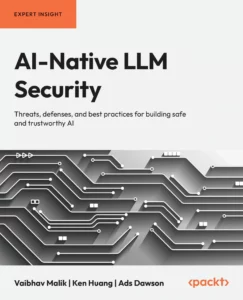
8. AI-Native LLM Security: Threats, Defenses, and Best Practices for Building Safe and Trustworthy AI — Vaibhav Malik, Ken Huang, Ads Dawson
Adversarial AI attacks exploit the very foundation of how AI learns, creating a unique and evolving set of security challenges. This book equips cybersecurity professionals with practical strategies, industry standards, and a secure-by-design methodology to defend generative AI and LLM applications. Built on the expertise of OWASP Top 10 for LLM co-authors, it covers threat modeling, MLSecOps, CI/CD integration, and ethical AI considerations for building trustworthy systems.
What You’ll Learn:
- Master LLM threat modeling from the ground up: Understand unique attack vectors, trust boundaries, and vulnerabilities specific to large language model architectures and deployments.
- Apply OWASP Top 10 for LLM Applications: Identify, prioritize, and mitigate the most critical security risks across diverse LLM deployment scenarios using proven frameworks.
- Integrate security into the AI development lifecycle: Embed security controls across data curation, model training, CI/CD pipelines, and MLOps practices from day one.
- Detect and respond to LLM security incidents: Design monitoring strategies, anomaly detection systems, and incident response plans tailored for operational LLM environments.
- Navigate legal, ethical, and governance landscapes: Align LLM security with regulatory requirements, responsible AI principles, and organizational risk management frameworks.
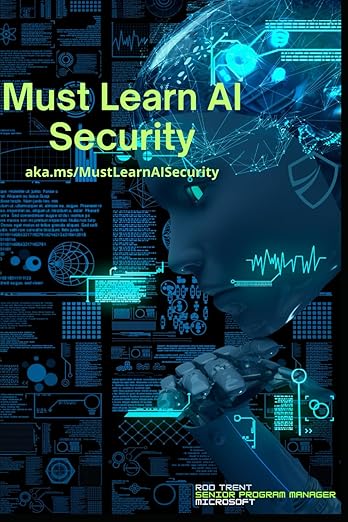
9. Learn AI Security – Rod Trent
As AI systems become deeply embedded in everyday technology, understanding the intersection of cybersecurity and artificial intelligence is no longer optional; it’s essential. This accessible yet comprehensive guide helps readers stay ahead of evolving cyber threats, protect AI-powered systems, and navigate the ethical complexities of a world increasingly shaped by intelligent machines. Written with wit and clarity, it’s a must-read for anyone entering the AI security space.
What You’ll Learn:
- Build a career-ready foundation in AI security: Acquire the core skills and mindset needed to pivot confidently into roles at the intersection of cybersecurity and artificial intelligence.
- Understand how cybercriminals exploit AI systems: Explore the innovative attack techniques hackers use to target AI-powered applications and how to defend against them effectively.
- Secure AI systems to protect personal and organizational privacy: Learn the foundational practices needed to prevent sensitive data exposure in AI-driven environments.
- Navigate the expanding AI landscape with confidence: Gain the knowledge to make informed decisions as AI integrates deeper into industries, devices, and daily workflows.
- Engage with the ethical dimensions of AI security: Develop a framework for thinking through complex moral questions that arise as AI capabilities continue to advance.
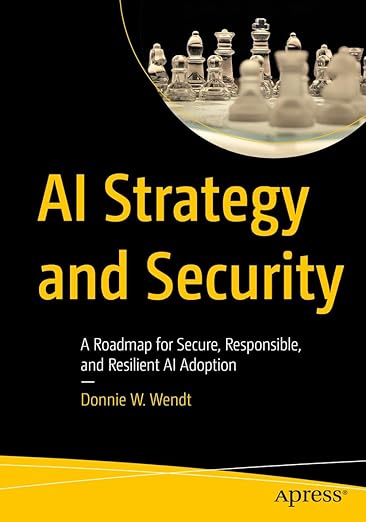
10. AI Strategy and Security: A Roadmap for Secure, Responsible, and Resilient AI Adoption – Donnie W. Wendt
Organizations that fail to integrate AI strategically and securely risk losing competitive ground in an increasingly AI-driven marketplace. This practical roadmap guides business leaders and security professionals through every phase of AI adoption, from strategy alignment to secure deployment and continuous operations. It bridges the gap between executive vision and technical execution, ensuring AI becomes a sustainable, resilient business advantage.
What You’ll Learn:
- Foster a culture of AI innovation and excellence: Embed AI as a core way of doing business by building organizational capabilities, mindsets, and practices that sustain competitive advantage.
- Develop an AI strategy aligned with core business objectives: Create a structured integration roadmap that ties AI initiatives directly to goals like market expansion, product differentiation, and process optimization.
- Apply a secure-by-design approach to AI development: Address AI-specific attack vectors using adversarial development, input/output filtering, model behavior monitoring, and drift analysis throughout the AI lifecycle.
- Establish AI governance and risk management frameworks: Ensure ongoing compliance with legislation, industry standards, and responsible AI principles through structured oversight mechanisms.
- Operationalize and scale AI applications for resilient production use: Implement metrics, conduct post-deployment ROI evaluations, and build continuous improvement processes for long-term AI success.
How to Choose the Right AI Security Book for You?
Not sure which book to pick? Don’t worry – We’ll help you choose AI security books that match your exact needs.
First, ask yourself these simple questions:
- What’s your tech background? New to cybersecurity? Start with beginner books that explain the basics. Already know traditional security? Jump to AI-focused titles.
- What’s your job role? Developers require books with coding examples.
- Security analysts want threat detection guides. Managers prefer strategy and leadership books.
- Theory or practice? Some people love understanding how things work. Others just want step-by-step instructions to resolve problems right now.
- Which AI area interests you? Machine learning security? IoT devices? Smart cars? Pick books that match your specific field.
Here’s your AI cybersecurity learning path:
- Beginners: Start with foundation books, then move to practical guides.
- Intermediate: Jump straight to advanced threat detection and hands-on implementation.
- Experts: Focus on cutting-edge research and specialized industry applications.
- Leaders: Choose books about AI security strategy, team building, and business impact.
Follow this path, and you’ll build solid AI security skills step by step.
Conclusion
AI security learning doesn’t have to be overwhelming. Pick one book from our list and start reading today. Every page gets you closer to AI Security career development success.
Ready to go further? Our Certified AI Security Professional Coursecombines the best book knowledge with hands-on practice. You’ll work on real AI security system attacks and learn directly from industry experts.
Don’t wait – AI threats grow stronger every day.
Also read about how to prepare for AI Security Certification.
FAQs
Start with “Large Language Models in Cybersecurity: Threats and Exposure and Mitigation” and “Hands-On Large Language Models: Language Understanding and Generation.” These books explain AI security threats in simple terms and provide practical examples for beginners.
Not always. Beginner books teach you everything step-by-step. If you can use a computer and understand basic internet concepts, you can start learning. Advanced books do need programming or security experience, though.
Buy new books every 12-18 months. AI security changes fast, so older books miss new threats and solutions. Follow top authors on social media to know when they release updated editions.
Yes! Try research papers, government cybersecurity guides, and open-source documentation. However, paid books are better organized, easier to understand, and include real-world examples you won’t find elsewhere.
AI security books focus on machine learning attacks, algorithm poisoning, and automated threats. Traditional cybersecurity covers firewalls, passwords, and network protection. You require both skills for complete security coverage.