

Supply chain attacks surged 742% over three years. The average breach now costs $4.63 million and takes 294 days to contain. Your application runs on 70-90% open-source dependencies. Each one is a potential attack vector.
SBOMs, SLSA attestations, and secure pipelines are now regulatory requirements under the EU Cyber Resilience Act and US Executive Order 14028. These five books give you the practical knowledge to build real defenses.
Certified Software Supply Chain Security Expert
Stop supply chain attacks: SLSA, NIST SDF & dependency confusion defense.

Why Software Supply Chain Security Matters Now
Supply chain attacks hit where traditional defenses fail. When SolarWinds fell, 18,000 organizations went down with it. Log4Shell exposed millions of applications overnight. XZ Utils nearly compromised Linux distributions worldwide.
Your application is 70-90% open-source dependencies. Each one is a potential entry point. SBOMs, SLSA attestations, and DevSecOps pipelines are no longer optional. The EU Cyber Resilience Act and US Executive Order 14028 made them mandatory.
The 5 Essential Books Every Security Professional Needs
1. Software Supply Chain Security by Cassie Crossley (O’Reilly, 2024)
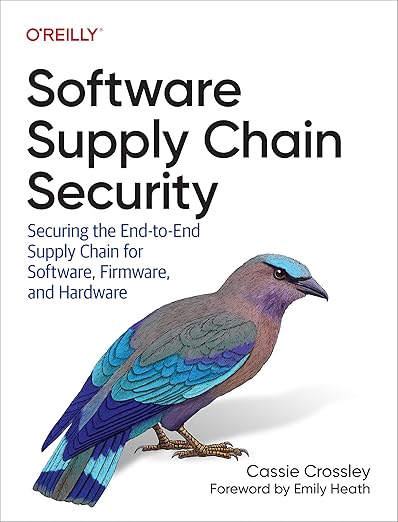
Best for: Security leaders building programs from scratch
Crossley spent years at Schneider Electric designing supply chain security frameworks. This book shows you how to do the same. No fluff. Just frameworks, controls, and implementation steps.
What you’ll learn:
- Risk assessment across your entire SDLC
- Third-party supplier evaluation frameworks
- SBOM generation and management strategies
- Manufacturing and device security controls
- Cloud and DevSecOps security integration
Why it stands out: Crossley is a CISA SBOM working group member. She bridges policy requirements (NIST SP 800-161, ISO/IEC 27036) with actual implementation. The appendix alone contains security controls you can deploy immediately.
Who should read it: CISOs, security architects, procurement teams, and anyone responsible for vendor risk management.
2. Software Transparency by Chris Hughes (Aquia, 2023)
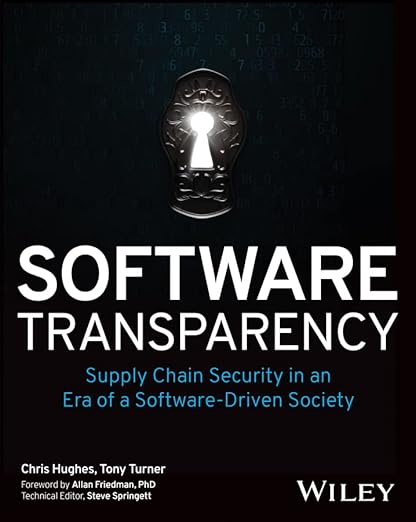
Best for: Understanding SBOM implementation and VEX documents
Hughes co-founded Aquia and serves as a CISA Cyber Innovation Fellow. This book tackles the “how” of software transparency. SBOMs are now legally required under the EU CRA. This book shows you how to generate, manage, and actually use them.
What you’ll learn:
- SBOM formats (SPDX vs. CycloneDX) and when to use each
- VEX (Vulnerability Exploitability eXchange) document creation
- Software provenance and attestation
- Integration with vulnerability management workflows
- Compliance with emerging regulations
Why it stands out: Most books tell you SBOMs are important. Hughes shows you how to make them actionable. He covers the CISA minimum elements framework and BSI TR-03183-2 requirements that are relevant for 2026 compliance.
Who should read it: DevSecOps engineers, compliance officers, and security teams managing open-source risk.
3. Crafting Secure Software by Greg Bulmash & Thomas Segura
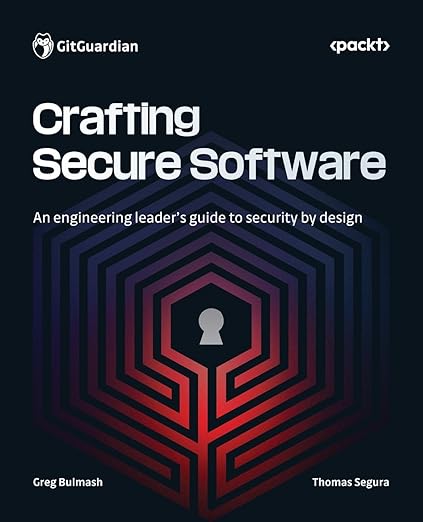
Best for: Engineering leaders securing the SDLC
Bulmash and Segura work at GitGuardian, where they’ve secured millions of lines of code. This book focuses on the engineering side: securing your code-writing tools, secrets management, source code integrity, and delivery pipelines.
What you’ll learn:
- Threat modeling tailored to your business risk
- Secrets detection and remediation in codebases
- Secure build pipeline design
- Source code security controls
- Navigating compliance (SOC 2, ISO 27001, upcoming regulations)
Why it stands out: This book addresses the developer experience. Security that slows down shipping gets ignored. Bulmash and Segura show you how to build security that developers actually want to use.
Who should read it: Engineering managers, DevOps teams, and security champions embedded in development organizations.
4. Securing the Software Supply Chain by Manning Publications
Best for: Hands-on practitioners implementing supply chain controls
Manning’s approach is always practical. This book walks you through implementing supply chain security controls step by step. Expect code examples, configuration templates, and real-world scenarios.
What you’ll learn:
- CI/CD pipeline hardening
- Dependency management and vulnerability scanning
- Container and Kubernetes security
- Policy-as-code implementation with OPA
- Incident response for supply chain compromises
Why it stands out: Manning books are built for practitioners. If you need to implement SLSA compliance in your CI/CD pipeline tomorrow, this book gives you the blueprint.
5. Supply Chain Software Security by Springer (2024)
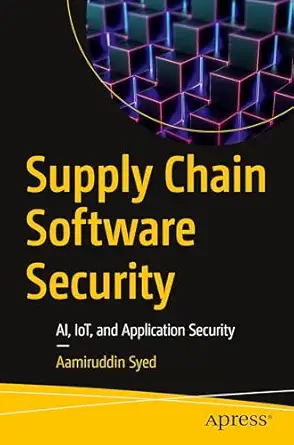
Best for: Academic rigor and emerging research
This Springer publication covers supply chain security from a research perspective. It includes contributions from multiple security researchers and covers AI/ML security, IoT supply chains, and application security at scale.
What you’ll learn:
- Advanced threat modeling for complex supply chains
- AI-generated code security risks
- IoT and embedded systems supply chain attacks
- Blockchain-based supply chain verification
- Case studies from real-world breaches
Why it stands out: This book looks forward. Quantum-resistant cryptography, adversarial ML attacks, and post-quantum supply chain security are covered here before they hit mainstream security blogs.
Who should read it: Security researchers, architects planning for future threats, and teams working with AI/ML systems.
How to Choose the Right Book for Your Role
- If you’re a CISO or security leader: Start with Crossley’s “Software Supply Chain Security.” It gives you the frameworks and business case you need to build a program.
- If you’re implementing SBOMs: Hughes’ “Software Transparency” is your reference guide. Keep it next to your desk.
- If you’re a developer or DevOps engineer: Bulmash and Segura’s “Crafting Secure Software” speaks your language. It won’t waste your time with theory.
- If you’re building CI/CD security: Manning’s “Securing the Software Supply Chain” gives you the technical implementation details you need.
- If you’re planning for 2027 and beyond: The Springer publication covers emerging threats like AI supply chain attacks and quantum cryptography.
The Reality of Supply Chain Security in 2026
Reading books won’t stop attacks. Implementation will.
- The EU Cyber Resilience Act is now law. US federal agencies must comply with SSDF requirements. SBOM generation is mandatory. Dependency management is no longer optional. Policy-as-code and zero trust architectures are table stakes.
- These books give you the knowledge. Your job is to apply it.
- Start with one book. Pick the one that matches your immediate need. Read it. Implement one chapter. Then move to the next.
Supply chain security is not a project. It’s a continuous process. These books are your roadmap.
Conclusion
Software supply chain security separates secure organizations from breached ones. These five books cover what matters: frameworks, SBOM implementation, secure coding, CI/CD hardening, and emerging threats. All written by practitioners who’ve built these controls at scale.
Pick one based on your role. Read it. Implement it. Then move to the next.
Want hands-on training alongside the theory? The Certified Software Supply Chain Security Expert (CSSE) course takes you from concepts to implementation. SBOM generation, dependency scanning, SLSA compliance, and pipeline security. All practical, lab-driven learning. Enroll in CSSE and turn knowledge into action.