

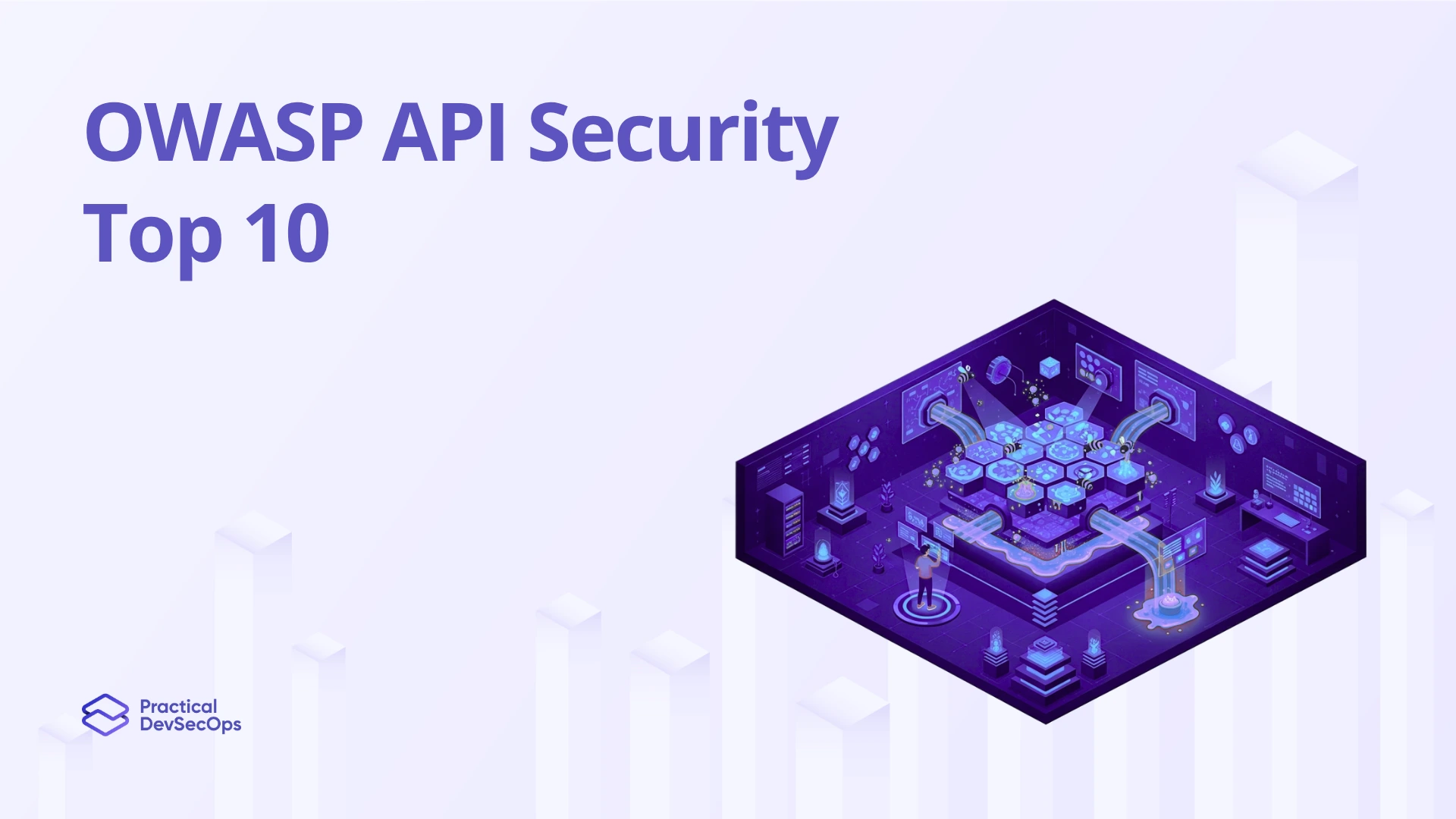
APIs are the attack surface most organizations are still underestimating. The OWASP API Security Top 10 exists precisely because API vulnerabilities don’t behave like traditional web app flaws. They’re harder to detect, easier to chain, and increasingly targeted. With the 2023 update now the active standard, security professionals need more than a list. They need to know what changed, what to prioritize, and where most teams are still getting it wrong.
Certified API Security Professional
Secure REST, GraphQL & SOAP APIs: OWASP Top 10 + hands-on testing.

Why the 2023 Update Matters More Than You Think
The 2019 list was a starting point. The 2023 version reflects how attackers actually operate now.
Three key shifts:
- Excessive Data Exposure + Mass Assignment merged into API3:2023 (Broken Object Property Level Authorization). The root cause was always the same. OWASP finally called it.
- SSRF got its own slot (API7:2023). Webhooks, cloud metadata endpoints, and internal service calls made it too dangerous to leave buried.
- Unsafe Consumption of APIs (API10:2023) replaced Insufficient Logging. Third-party API trust is now a first-class threat vector.
Injection and logging dropped off entirely. That’s not because they stopped mattering. It’s because authorization failures now dominate the threat landscape.
The OWASP API Security Top 10 – Practitioner Quick Reference
| Risk | ID | Fix Priority |
| Broken Object Level Authorization (BOLA) | API1 | Critical |
| Broken Authentication | API2 | Critical |
| Broken Object Property Level Authorization | API3 | Critical |
| Unrestricted Resource Consumption | API4 | High |
| Broken Function Level Authorization (BFLA) | API5 | High |
| Unrestricted Access to Sensitive Business Flows | API6 | High |
| Server-Side Request Forgery (SSRF) | API7 | High |
| Security Misconfiguration | API8 | Medium |
| Improper Inventory Management | API9 | Critical |
| Unsafe Consumption of APIs | API10 | Medium |
Start with API1, API2, and API9. BOLA alone accounts for roughly 40% of API attacks. Broken authentication is the entry point for account takeovers. And API9 is the silent killer most teams ignore.
The Zombie API Problem Nobody Talks About
API9 (Improper Inventory Management) is consistently underrated. Most teams focus on securing the APIs they know about. The problem is the ones they don’t.
Deprecated endpoints, shadow APIs, and debug routes left open in staging. These are the attack surfaces that doesn’t show up in your API gateway logs because nobody documented them.
The Dell breach that exposed 49 million customer records? Attackers found an undocumented partner portal endpoint, created a fake partner account, and scraped data at thousands of requests per minute. No rate limiting. No inventory control. Classic API9 + API4 chain.
Fix it: Run continuous API discovery. Tie every endpoint to an owner. Decommission anything not in active use.
Where AI/LLM APIs Break the Rules
Most OWASP content ignores this. LLM-backed APIs introduce new attack surfaces that don’t fit neatly into the 2023 list.
- BOLA in AI agents: When an LLM agent calls downstream APIs on behalf of a user, object-level authorization checks often get skipped entirely.
- SSRF via prompt injection: An attacker crafts a prompt that causes the LLM to make outbound requests to internal services. API7 meets LLM01.
- Unsafe consumption at scale: LLM pipelines frequently pull from third-party APIs without validating responses. API10 risk multiplied.
If your team is building or securing AI-powered APIs, the OWASP Top 10 for LLM Applications should sit alongside the API Security Top 10, not replace it.
Fix It Before It Ships: Shift-Left Checklist
Don’t wait for a pentest to find these. Map each risk to your SDLC:
- Design phase: Threat model every endpoint. Define object-level and function-level authorization rules before writing code.
- Development: Enforce field allowlists. Block mass assignment. Validate all outbound URLs against an allowlist (SSRF).
- CI/CD: Run automated DAST scans mapped to OWASP API Top 10. Gate deployments on critical findings.
- Production: Continuous API discovery. Rate limiting on every public endpoint. Alert on anomalous consumption patterns.
Conclusion
The OWASP API Security Top 10 is not a compliance checkbox. It’s a map of how APIs get breached in the real world. Most organizations are still treating API security as an afterthought, bolted on after deployment. That’s exactly why BOLA has held the top spot since 2019.
Fix authorization first. Audit your inventory. And if you’re running AI-powered APIs, extend your threat model now. The attack surface already has.
BOLA, broken authentication, zombie APIs. You now know where the gaps are. The next step is knowing how to close them.
The Certified API Security Professional (CASP) course from Practical DevSecOps gives you hands-on experience attacking and defending real APIs. You’ll work through JWT and OAuth exploitation, BOLA and BFLA scenarios, GraphQL attack surfaces, SSRF defenses, and full CI/CD pipeline security. All in a browser-based lab. No setup required.
What you’ll walk away with:
- The ability to find and fix OWASP API Top 10 vulnerabilities before they ship
- Hands-on skills with Burp Suite, Postman, FFUF, HashiCorp Vault, and more
- A practical exam. 6 hours, 5 real challenges, a written report. Proof you can actually do the work
- A lifetime certification that hiring managers in a $58B market actively look for
If API security is where breaches happen, it should also be where your expertise is sharpest.