

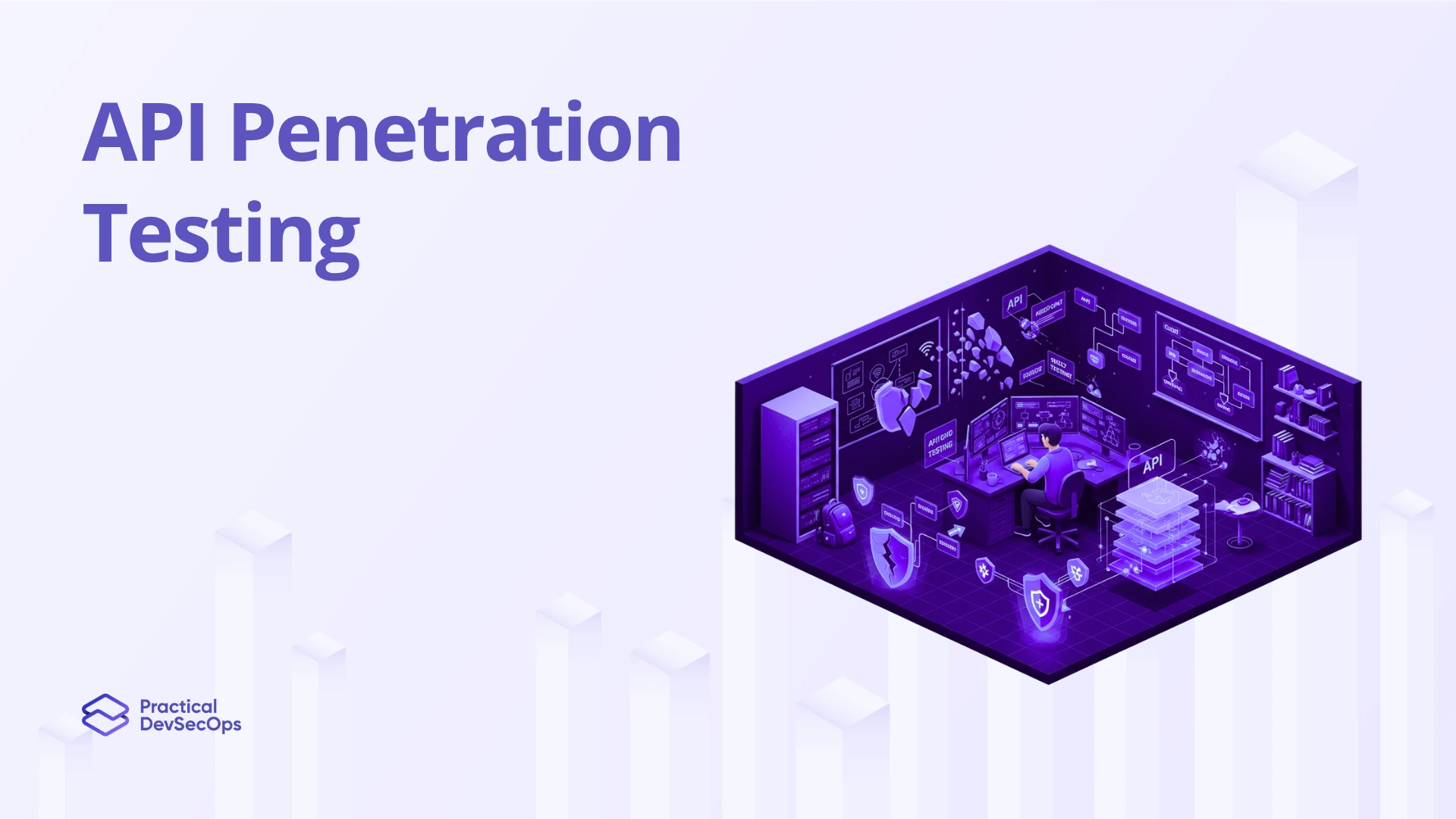
API penetration testing is the practice of simulating real-world attacks against your API endpoints to find exploitable vulnerabilities before attackers do. It goes beyond automated scanning. It requires human intelligence to uncover broken authorization logic, weak authentication flows, and business logic flaws that no scanner will ever flag.
With over 80% of web traffic now flowing through APIs and breaches like T-Mobile’s 37-million-record exposure tracing back to a single authorization failure, this is not a “nice to have.” It is a security requirement.
Certified API Security Professional
Secure REST, GraphQL & SOAP APIs: OWASP Top 10 + hands-on testing.

Why Automated Scanners Are Not Enough
Most teams run a DAST tool, check the box, and move on. That is a mistake.
Automated scanners detect pattern-based vulnerabilities. They find SQL injection, missing headers, and known CVEs. What they cannot do is understand context. They cannot tell that your /orders/{id} endpoint lets User A pull User B’s order history just by changing an integer. That is a business logic flaw. That is BOLA. What caused the Optus breach?
Manual API penetration testing fills this gap. A skilled tester will:
- Map every endpoint, including undocumented shadow APIs
- Test authorization at each step of multi-step workflows
- Forge JWT tokens, test OAuth code reuse, and probe session invalidation
- Chain multiple low-severity findings into a critical attack path
The OWASP API Top 10: Where to Focus First
The OWASP API Security Top 10 is your starting framework. The three highest-impact categories in real-world breaches:
1. Broken Object Level Authorization (BOLA)
Change a user ID in a URL parameter. If you get another user’s data back, you have BOLA. This single flaw accounts for more API breaches than any other category.
2. Broken Authentication
Test for weak JWT signing secrets, missing token expiry, and OAuth code reuse. A financial API using “secret123” as a JWT signing key is not hypothetical. It happens.
3. Excessive Data Exposure
APIs routinely return full database objects when only three fields are needed. Check every response for password hashes, internal IDs, and tokens that should never leave the server.
Also read about API Security Best Practices
Shadow APIs: The Attack Surface Nobody Maps
Before you test, you need to know what you are testing. Most organizations have shadow APIs. These are undocumented endpoints left active after a product change, a migration, or a developer shortcut. They often lack the security controls applied to documented endpoints.
Discovery steps:
- Proxy your web and mobile apps through Burp Suite to capture live traffic
- Review old Swagger/OpenAPI specs against current traffic
- Check JavaScript bundles for hardcoded endpoint references
- Scan for version endpoints (/v1/, /v2/, /internal/, /admin/)
If you skip this step, your pentest scope is incomplete by definition.
What a Good API Pentest Report Must Include
Most pentest reports are useless. They list CVEs, assign CVSS scores, and leave your developers confused. Demand these four things from any vendor:
- Proof of exploitation: Not just “this endpoint is vulnerable.” Show the actual request and response that proves data was accessed.
- Business impact statement: What data is at risk, what compliance obligation is violated, and what the breach scenario looks like.
- Remediation steps: Specific code-level or configuration fixes, not generic advice.
- Retest confirmation: The vendor retests after you resolve the issue and confirms the vulnerability is closed.
Manual vs. Automated: When to Use Each
| Scenario | Use Automation | Use Manual Testing |
| OWASP API Top 10 baseline | Yes | No |
| Business logic flaws | No | Yes |
| CI/CD regression checks | Yes | No |
| Multi-step attack chains | No | Yes |
| New feature pre-release | Yes | No |
| Complex authorization models | No | Yes |
Automate the repeatable. Test manually what requires judgment.
Compliance Mapping: What API Testing Covers
If you are working toward PCI DSS, SOC 2, or HIPAA, API penetration testing directly satisfies specific controls:
- PCI DSS 11.3: Requires penetration testing of all in-scope systems, including APIs handling cardholder data.
- SOC 2 CC7.1: Requires detection of security events through testing
- HIPAA: Requires technical safeguard evaluation, which includes API access controls.
Document your test scope, methodology, and findings. Auditors want evidence, not assurances.
Conclusion
API penetration testing done right is not a checklist exercise. It is a structured attack simulation that requires scoping, discovery, manual exploitation, and a report that actually drives remediation. Run it before major releases, after architecture changes, and at minimum annually. If your current vendor hands you a PDF with CVSS scores and no proof of exploitation, find a different vendor.
Any tester can run a DAST scanner. The professionals organizations pay $141K–$190K+ for are the ones who can find what scanners miss. Broken authorization logic, forged tokens, chained attack paths, and business logic flaws buried inside multi-step workflows.
That’s exactly what the Certified API Security Professional (CASP) course trains you to do.
What you’ll gain:
- Hands-on experience attacking REST, GraphQL, and SOAP APIs across the full OWASP API Top 10
- Skills to discover undocumented shadow APIs and map attack surfaces before a pentest begins
- The ability to exploit BOLA, authentication flaws, and injection vulnerabilities in live lab environments
- Practical experience with the tools actual pentesters use. Burp Suite, Postman, FFUF, SQLmap, and more.
- A 6-hour practical exam that produces a real pentest report. The kind auditors and hiring managers actually want to see.
Certified API Security Professional
Secure REST, GraphQL & SOAP APIs: OWASP Top 10 + hands-on testing.
If you’re moving toward PCI DSS, SOC 2, or HIPAA compliance work, this cert directly maps to the testing requirements those frameworks demand.